
LEGACY BUILDER
Anna Julia Cooper
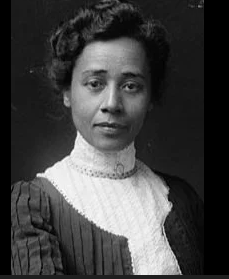
Anna Julia Cooper believed education was more than a path to individual advancement—it was a means of liberation. As a scholar, educator, author, and advocate for Black women’s intellectual freedom, she spent her life insisting that Black people, and especially Black women, had the right to learn, to think, to lead, and to shape the future.
WHY HER STORY MATTERS
Education Was Her Weapon. Knowledge Was Her Legacy.
Anna Julia Cooper understood something that those who sought to limit Black advancement understood all too well: education could change the trajectory of a life, a community, and a generation.
Born into a world that denied Black people equal access to knowledge and denied Black women a voice in intellectual life, Cooper refused to accept either limitation. She pursued education, became an educator, wrote boldly about race, gender, and equality, and spent her life opening doors for others to learn and lead.
Her story is not simply the story of one remarkable woman. It is the story of what happens when a Black woman insists that her mind, her voice, and her vision belong in the room.
They tried to limit access to knowledge. She expanded the possibilities.
A LIFE BUILT AROUND LEARNING
She Refused to Let the World Decide How Far Her Mind Could Go
Anna Julia Cooper was born in Raleigh, North Carolina, in 1858, into a society determined to place limits on what Black people could become—and even greater limits on what Black women could imagine for themselves.
Education became the foundation of her life.
She attended St. Augustine’s Normal School and Collegiate Institute, where she distinguished herself as a student and educator. She later continued her studies at Oberlin College, becoming part of a generation of Black scholars who understood that education could be both personal transformation and collective resistance.
But Cooper did not pursue knowledge simply to advance herself. She believed deeply in the power of education to strengthen Black communities and expand the possibilities available to those who came after her.
That belief would shape nearly every chapter of her life.
For Cooper, learning was never the destination. It was the beginning.
A LIFE OF LEARNING & LEADERSHIP
Every Chapter Expanded What Was Possible
1858
A Beginning in Raleigh
Anna Julia Cooper was born in Raleigh, North Carolina, into a society still shaped by slavery and racial inequality. Her early life unfolded during Reconstruction, a period when education would become central to the struggle for Black freedom and advancement.
1868–1877
Education at St. Augustine's
Cooper attended St. Augustine’s Normal School and Collegiate Institute, an institution founded to educate formerly enslaved people and their descendants. There she developed the intellectual foundation that would shape her life’s work as a scholar and educator.
1881
Oberlin College
Cooper continued her education at Oberlin College, where she earned a bachelor’s degree before pursuing graduate study. Her education placed her within a tradition of Black intellectuals who saw scholarship as essential to racial progress.
1880s–1890s
The Educator Takes Her Place
Cooper devoted herself to teaching and educational leadership. She became a teacher and later a principal at M Street High School in Washington, D.C., where she advocated for rigorous academic preparation for Black students.
1892
A Voice from the South
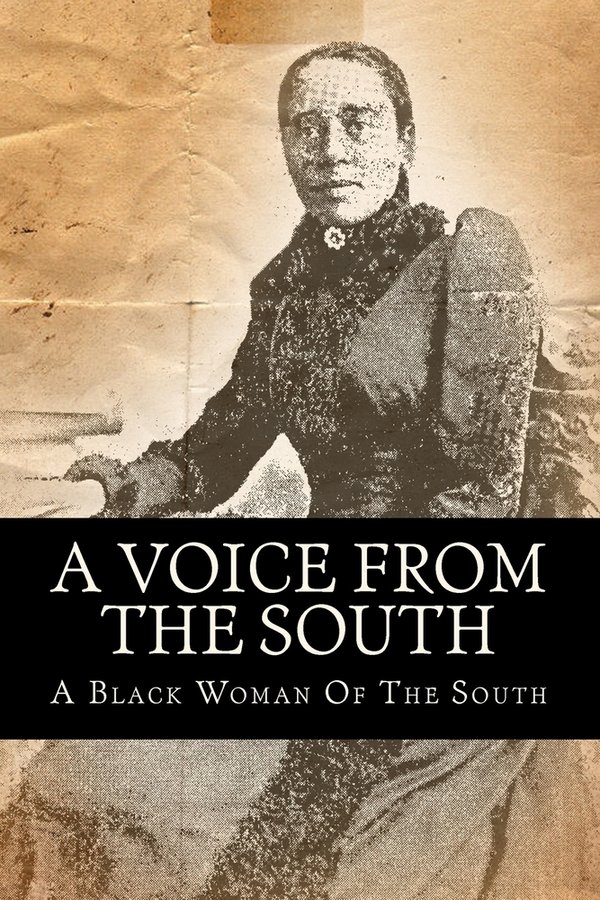
Cooper published A Voice from the South: By a Black Woman of the South, a groundbreaking collection of essays addressing race, gender, education, and the intellectual lives of Black women. Her writing made a powerful case for Black women’s education and leadership.
1902–1906
Defending Academic Excellence
As principal of M Street High School, Cooper championed a demanding classical curriculum and believed Black students deserved the same rigorous education offered to white students. Her approach placed her at the center of debates about the purpose and future of Black education.
1924–1925
Doctor of Philosophy
After decades devoted to education and scholarship, Cooper earned a doctorate from the University of Paris—later known as the Sorbonne—in 1925. Her dissertation examined slavery in the French Revolution, making her one of the earliest Black women to earn a doctoral degree.
1964
A Legacy That Outlived Her
Anna Julia Cooper died in Washington, D.C., at the age of 105. By then, she had spent more than a century demonstrating that education, scholarship, and intellectual independence could be instruments of liberation.
A LIFE OF LEARNING & LEADERSHIP
Every Chapter Expanded What Was Possible
1858
A Beginning in Raleigh
Anna Julia Cooper was born in Raleigh, North Carolina, into a society still shaped by slavery and racial inequality. Her early life unfolded during Reconstruction, a period when education would become central to the struggle for Black freedom and advancement.
1868–1877
Education at St. Augustine's
Cooper attended St. Augustine’s Normal School and Collegiate Institute, an institution founded to educate formerly enslaved people and their descendants. There she developed the intellectual foundation that would shape her life’s work as a scholar and educator.
1881
Oberlin College
Cooper continued her education at Oberlin College, where she earned a bachelor’s degree before pursuing graduate study. Her education placed her within a tradition of Black intellectuals who saw scholarship as essential to racial progress.
1880s–1890s
The Educator Takes Her Place
Cooper devoted herself to teaching and educational leadership. She became a teacher and later a principal at M Street High School in Washington, D.C., where she advocated for rigorous academic preparation for Black students.
1892
A Voice from the South
Cooper published A Voice from the South: By a Black Woman of the South, a groundbreaking collection of essays addressing race, gender, education, and the intellectual lives of Black women. Her writing made a powerful case for Black women’s education and leadership.
1902–1906
Defending Academic Excellence
As principal of M Street High School, Cooper championed a demanding classical curriculum and believed Black students deserved the same rigorous education offered to white students. Her approach placed her at the center of debates about the purpose and future of Black education.
1924–1925
Doctor of Philosophy
After decades devoted to education and scholarship, Cooper earned a doctorate from the University of Paris—later known as the Sorbonne—in 1925. Her dissertation examined slavery in the French Revolution, making her one of the earliest Black women to earn a doctoral degree.
1964
A Legacy That Outlived Her
Anna Julia Cooper died in Washington, D.C., at the age of 105. By then, she had spent more than a century demonstrating that education, scholarship, and intellectual independence could be instruments of liberation.
Anna Julia Cooper · 1892
THE VOICE OF A BLACK WOMAN
She Put Black Women's Intellectual Lives on the Page
In 1892, Anna Julia Cooper published A Voice from the South: By a Black Woman of the South, a collection of essays that challenged the racial and gender assumptions of her time.
Cooper argued that Black women were not simply witnesses to history—they were thinkers, educators, leaders, and essential participants in the future of Black communities.
She wrote about education, race, gender, Christianity, and the conditions shaping Black life in America. But beneath those subjects was a larger argument: Black women needed the freedom and opportunity to develop their minds and use their voices.
More than a century later, her words still challenge us to ask whose knowledge is valued, whose voices are heard, and who gets to define what intellectual excellence looks like.
“The cause of freedom is not the cause of a race or a sect, a party or a class—it is the cause of human kind, the very birthright of humanity.”
THE EDUCATOR
She Believed Black Students Deserved More
For Anna Julia Cooper, education was never about simply passing information from one generation to the next. It was about giving people the intellectual tools to understand their world—and the confidence to transform it.
As a teacher and principal, Cooper challenged the idea that Black students should receive an education designed only to prepare them for limited roles. She advocated for rigorous academic study, believing Black students deserved access to the classics, literature, languages, mathematics, and the full breadth of intellectual life.
At Washington, D.C.’s M Street High School, she fought to maintain high academic standards and prepare Black students for college and professional life. Her approach placed her in conflict with those who believed Black education should be more narrowly vocational.
Cooper refused to lower the horizon.
She understood that what students were taught communicated something powerful about what society believed they could become.
“The higher education of women is a necessity.”
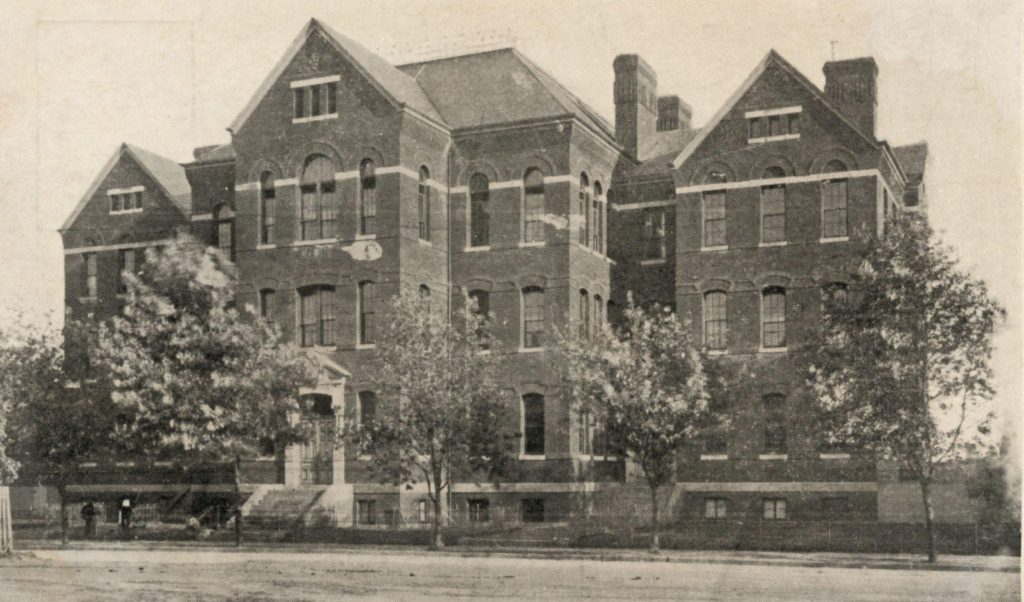
where Anna Julia Cooper served as principal.
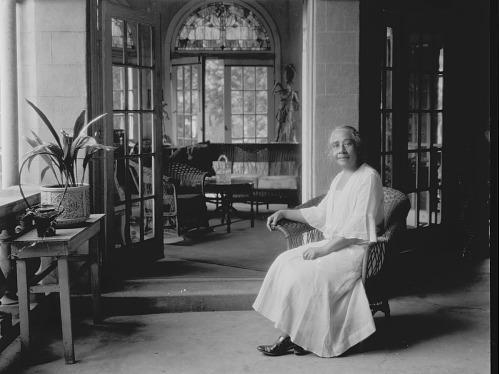
Scholar, educator, author, and advocate for Black women's intellectual freedom.
THE SCHOLAR
She Claimed Intellectual Space for Black Women
Anna Julia Cooper understood that education was not only about learning what had already been written. It was also about having the opportunity to question, interpret, challenge, and create knowledge.
At a time when Black women were routinely excluded from intellectual and academic life, Cooper insisted that their experiences and ideas mattered. She wrote about race and gender not as separate questions, but as forces that shaped the lives and possibilities of Black people.
Her scholarship challenged the assumption that Black women belonged only on the margins of intellectual history. Cooper placed Black women’s voices, experiences, and perspectives at the center of the conversation.
That intellectual independence remained a defining feature of her life. She continued her education well into adulthood and, in 1925, earned a doctorate from the University of Paris with a dissertation examining slavery and the French Revolution.
She was not simply studying history.
She was helping determine who would be remembered within it.
“I speak of the race, not the sex.”
WHY SHE MATTERS
Her Legacy Reaches Far Beyond the Classroom
Anna Julia Cooper’s life reminds us that education is not simply about what we learn. It is about who gets to learn, who gets to speak, whose knowledge is valued, and what becomes possible when people are given the freedom to develop their minds.
EDUCATION
She Expanded the Meaning of Education
Education was not preparation for a limited life. Cooper believed Black students deserved rigorous academic opportunities that prepared them to think, lead, and shape their communities.
INTELLECTUAL FREEDOM
She Defended the Right to Think
Cooper challenged the idea that intellectual authority belonged primarily to white men. She claimed space for Black women as scholars, writers, educators, and thinkers.
BLACK WOMEN'S VOICES
She Put Black Women at the Center
Cooper understood that Black women were not observers of history. Their experiences, ideas, and leadership were essential to understanding Black life and the struggle for equality.
LEGACY
Her Ideas Still Speak
More than a century after she published A Voice from the South, Cooper’s questions about education, race, gender, and intellectual freedom remain relevant.
LEGACY BUILDER
Meet the Woman Behind the Legacy
Anna Julia Cooper’s life was more than a collection of accomplishments. She was a teacher, scholar, author, and lifelong advocate for the power of education—and her work continues to challenge us to think differently about who gets to shape knowledge and whose voices deserve to be remembered.
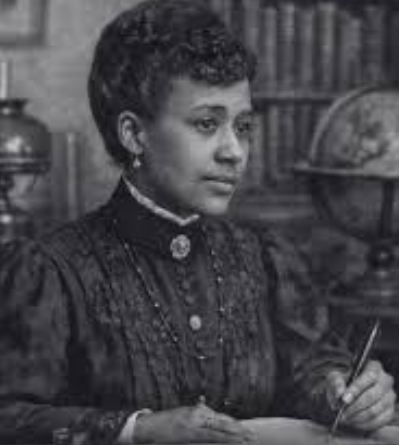
Educator, scholar, author, and advocate for Black women's intellectual freedom.
LEGACY BUILDER
A Life That Made Education an Act of Liberation
Anna Julia Cooper spent more than a century demonstrating what becomes possible when education, scholarship, and determination are placed in service of a larger purpose. From the classroom to the written page, she challenged the boundaries placed around Black education and Black women’s intellectual lives.
Her legacy is not simply that she achieved extraordinary things. It is that she used what she learned to create greater possibilities for others.