
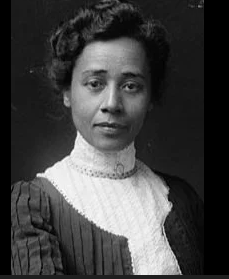
Anna Julia Cooper
The Scholar They Should Have Taught Us
Era
Category
Role:
The Story
Born into slavery in Raleigh, North Carolina, Anna Julia Cooper became a pioneering educator, author, scholar, and advocate for Black women and Black education. From the classroom to the pages of A Voice from the South and ultimately to the Sorbonne, Cooper spent her life challenging the limits placed on Black people—especially Black women—and insisting that education was essential to freedom, dignity, and progress.
Quick Facts
Born
Died
Known For
Life & Legacy Timeline
1858 — Born in Raleigh, North Carolina
Anna Julia Haywood was born into slavery on August 10, 1858. After emancipation, she began her formal education at Saint Augustine’s Normal School and Collegiate Institute in Raleigh.
1868 — Begins Her Education at Saint Augustine’s
At approximately ten years old, Cooper began attending Saint Augustine’s, where she also tutored other students. She challenged the school’s gender restrictions and successfully gained access to courses previously reserved for boys.
1877 — Graduates from Saint Augustine’s
After fourteen years at Saint Augustine’s, Cooper graduated and continued her work as an educator.
1877 — Marries George A. C. Cooper
She married George A. C. Cooper, a teacher and theologian. He died only two years later, leaving Anna a young widow.
1881 — Enters Oberlin College
Cooper enrolled at Oberlin College in Ohio, continuing to teach while pursuing her education. She became one of the first Black women to graduate from Oberlin.
1884 — Earns Her Bachelor’s Degree
Cooper received her bachelor’s degree from Oberlin College. She later received an honorary master’s degree in 1887.
1887 — Begins Teaching at M Street High School
Cooper joined the faculty of M Street High School in Washington, D.C., one of the nation’s leading Black college-preparatory schools.
1892 — Publishes A Voice from the South
Cooper published A Voice from the South: By a Black Woman of the South, a groundbreaking collection of essays and speeches addressing race, gender, education, and the experiences and intellectual contributions of Black women.
1892 — Helps Found the Colored Women’s League
Cooper helped establish the Colored Women’s League of Washington, D.C., which promoted education, opportunity, and community support for Black women and children.
1900 — Speaks at the First Pan-African Conference
Cooper traveled to London and participated in the First Pan-African Conference, bringing her voice as a Black woman educator and intellectual to an international audience.
1901–1906 — Principal of M Street High School
Cooper became principal of M Street High School and championed a rigorous college-preparatory education for Black students. Her approach challenged efforts to limit Black education primarily to vocational training.
1910–1929 — Returns to M Street and Continues Teaching
After returning to M Street High School, Cooper continued teaching and shaping generations of students while remaining active in scholarship and community service.
1925 — Earns Her Ph.D. from the Sorbonne
At age 66, Cooper successfully defended her doctoral thesis at the University of Paris-Sorbonne. She became the fourth Black woman in the United States to earn a Ph.D.
1929 — Leads Frelinghuysen University
Cooper became president of Frelinghuysen University in Washington, D.C., an institution serving working African Americans through accessible higher education.
1964 — Dies at Age 105
Anna Julia Cooper died in Washington, D.C., on February 27, 1964. She was buried in Raleigh, North Carolina, alongside her husband.
Legacy
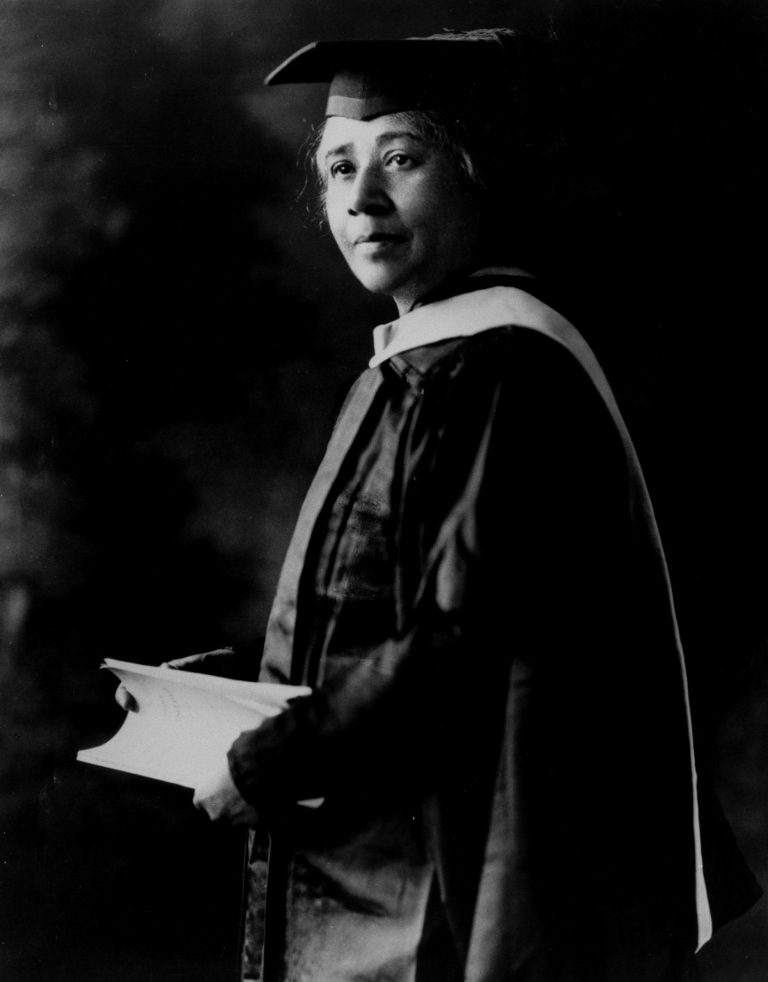
A Quote to Remember
“It's not what we say about ourselves, it's what our lives stand for.”
- Anna Julia Cooper
Why This Matters
Sources & Further Reading
National Park Service — Dr. Anna Julia Cooper
Smithsonian National Museum of African American History and Culture — Anna Julia Cooper: Educator, Writer and Intellectual
Smithsonian Institution / Anacostia Community Museum — Anna J. Cooper: A Voice from the South
Anna Julia Cooper, A Voice from the South: By a Black Woman of the South (1892)
Continue Exploring
Discover more stories of Black history, courage, and resilience.
There are more stories waiting to be discovered. Explore the people, places, movements, and moments that have shaped Black history and continue to influence our world today.