
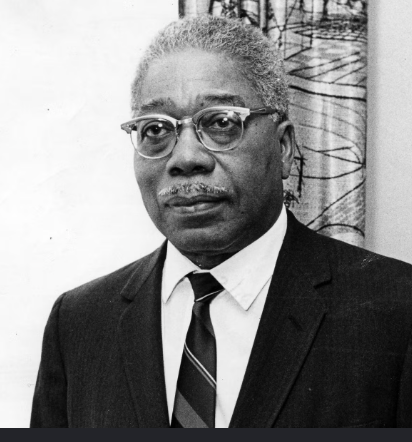
Aaron Douglas
Painter, Muralist & Architect of the Harlem Renaissance
Category
Role:
The Story
Aaron Douglas transformed the visual language of the Harlem Renaissance. Through paintings, murals, illustrations, and teaching, he blended African and African American imagery with modernist influences to create a powerful new way of representing Black history, identity, struggle, and possibility. His work helped establish a visual vocabulary that continues to influence Black artists today.
Quick Facts
Born
Died
Known For
Life & Legacy Timeline
1899 — Born
Aaron Douglas is born in Topeka, Kansas, on May 26.
1922 — Earns BFA
Graduates from the University of Nebraska with a Bachelor of Fine Arts degree.
1925 — Moves to Harlem
Moves to New York and becomes immersed in the Harlem Renaissance.
1927 — Joins The Crisis
W. E. B. Du Bois invites Douglas to become an art critic for The Crisis.
1927 — God’s Trombones
Illustrates James Weldon Johnson’s God’s Trombones, establishing his reputation as a major visual artist of the Harlem Renaissance.
1931 — Studies in Paris
Travels to Paris for additional artistic training and encounters European and African-influenced modernist traditions.
1936 — Aspects of Negro Life
Creates major mural works addressing Black history and experience, including Into Bondage and other works in the Aspects of Negro Life series.
1940 — Fisk University
Accepts a full-time position in the art department at Fisk University, where he eventually becomes department chair and mentors generations of students.
1966 — Retires from Fisk
Retires after decades of teaching and leading Fisk’s art department.
1979 — Dies
Dies in Nashville, Tennessee, at age 80.
Legacy
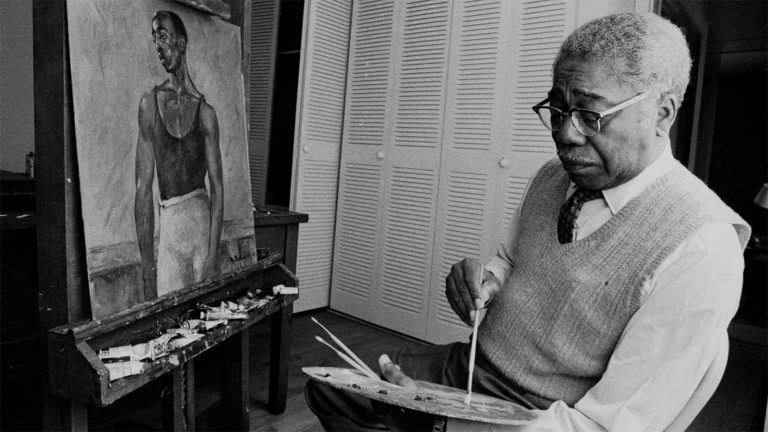
A Quote to Remember
“Art is not a thing that is apart from life.”
- Aaron Douglas
Why This Matters
Sources & Further Reading
National Gallery of Art — Aaron Douglas
Biographical overview of Douglas’s life, career, artistic development, and major works.
Smithsonian American Art Museum — Aaron Douglas: African American Modernist
Overview of Douglas’s artistic career and his development of a distinctive visual vocabulary combining African and African American imagery with Cubism and Art Deco.
Smithsonian Archives of American Art — Aaron Douglas Papers, 1921–1973
Archival information documenting Douglas’s career, teaching, correspondence, and connection to Fisk University.
National Gallery of Art — Into Bondage, 1936
Detailed discussion of one of Douglas’s major paintings and its relationship to Black history and the Harlem Renaissance.
Continue Exploring
Discover more stories of Black history, courage, and resilience.
There are more stories waiting to be discovered. Explore the people, places, movements, and moments that have shaped Black history and continue to influence our world today.